
BloggingSkill guide · Updated August 2026 · 12-minute read
How to Build a Future-Ready Blogging Strategy in 2026
AI has made publishing easier, but it has not made earning attention easier. The blogs that grow now are built around search intent, firsthand usefulness, consistent improvement, and a measurement system that connects content to real outcomes.
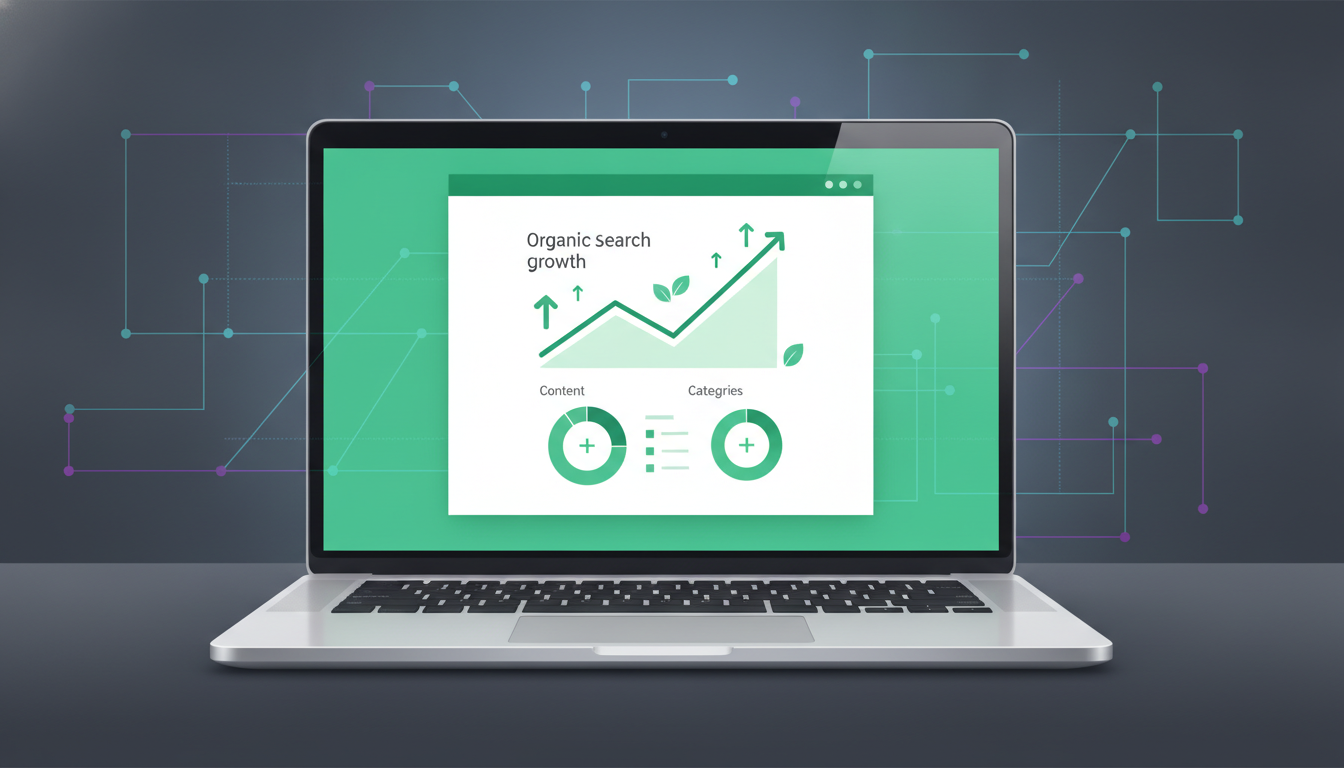
This is the central challenge for bloggers in 2026: there is more content than ever, yet readers have less patience for generic answers. A recent industry data collection reports more than 600 million blogs worldwide and around 7.5 million new posts every day. At the same time, Google continues to emphasise useful, reliable content and regularly publishes guidance through Google Search Central.
The opportunity is not to publish more words. It is to make each important piece more discoverable, more credible, and more useful than the alternatives. Here is a practical framework for doing that.
What current SERPs reveal about winning content
Live results for queries around blogging in 2026 show a clear pattern. The strongest pages combine tactical advice with evidence: current statistics, practical workflows, examples, and a point of view. They do not simply repeat “write quality content.” They explain what quality looks like and how a publisher can produce it consistently.
The research also suggests that long-form content remains valuable for complex topics. The 2026 statistics report places the average blog post at roughly 1,427 words and notes that posts above 2,000 words earn more links than very short posts. That is a useful benchmark, not a target to hit mechanically. A 700-word answer can be better than a padded 2,500-word article when the searcher needs a quick definition. For a competitive guide, however, depth helps you cover related questions and demonstrate expertise.
Use the SERP as a product brief. Before drafting, record:
- the dominant intent: informational, comparison, commercial, or navigational;
- the recurring subtopics and questions across page-one results;
- the formats Google appears to reward, such as guides, lists, templates, or case studies;
- the gaps: missing examples, outdated advice, weak explanations, or unanswered follow-up questions;
- the evidence you can add from your own testing, experience, or original analysis.
Your goal is not to imitate the first result. It is to create the page you would want to find after reading the first five.
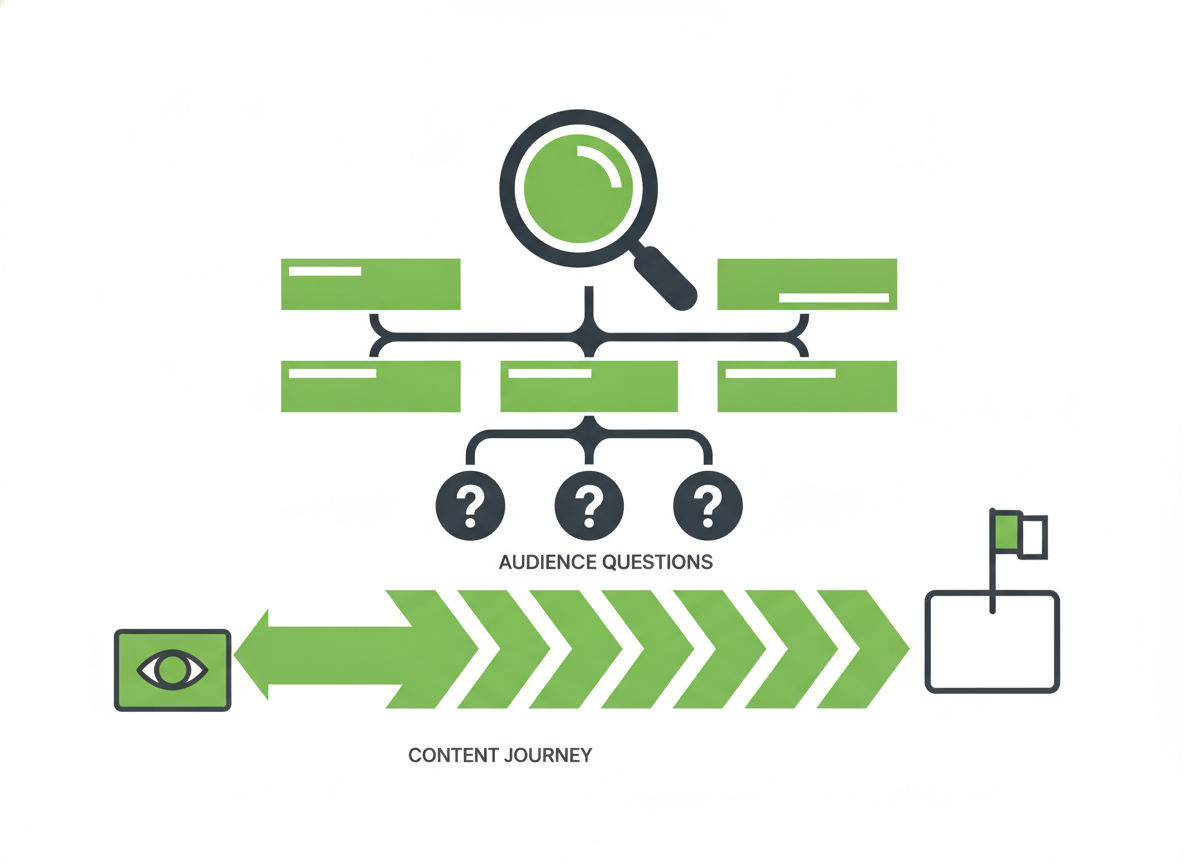
Map search intent before you choose a headline
Keywords are labels; intent is the problem behind the label. “Best blogging tools” may be a research query from a beginner, a shortlist request from a freelancer, or a buying query from a business owner. Each audience needs a different article.
A simple intent map has four columns:
- Search phrase: the exact wording and close variants.
- Reader situation: what the person is trying to accomplish right now.
- Decision after reading: what they should be able to do, choose, or understand.
- Proof required: screenshots, examples, numbers, demonstrations, or expert references.
For example, someone searching “how to start a WordPress blog” needs a safe sequence of actions, realistic costs, and decisions explained in plain language. Someone searching “WordPress vs Ghost for blogging” needs a comparison matrix and recommendations by use case. The keyword overlap is less important than the promised outcome.
Once intent is clear, write a headline that promises a specific transformation. “A Blogging Guide” is vague. “How to Build a Future-Ready Blogging Strategy in 2026” signals audience, timeframe, and outcome.
Use AI as an assistant, not as your editorial identity
AI is excellent at accelerating repetitive work: clustering questions, proposing outlines, turning notes into alternative structures, checking consistency, and identifying sections that need evidence. It is much weaker at replacing experience, judgment, and responsibility for accuracy.
The industry data reviewed for this article reports that 67% of bloggers use AI somewhere in their workflow. It also reports a meaningful performance gap between human-edited AI-assisted content and minimally edited or unedited AI output. The practical lesson is straightforward: let tools reduce production friction, then invest the saved time in better inputs and better editing.
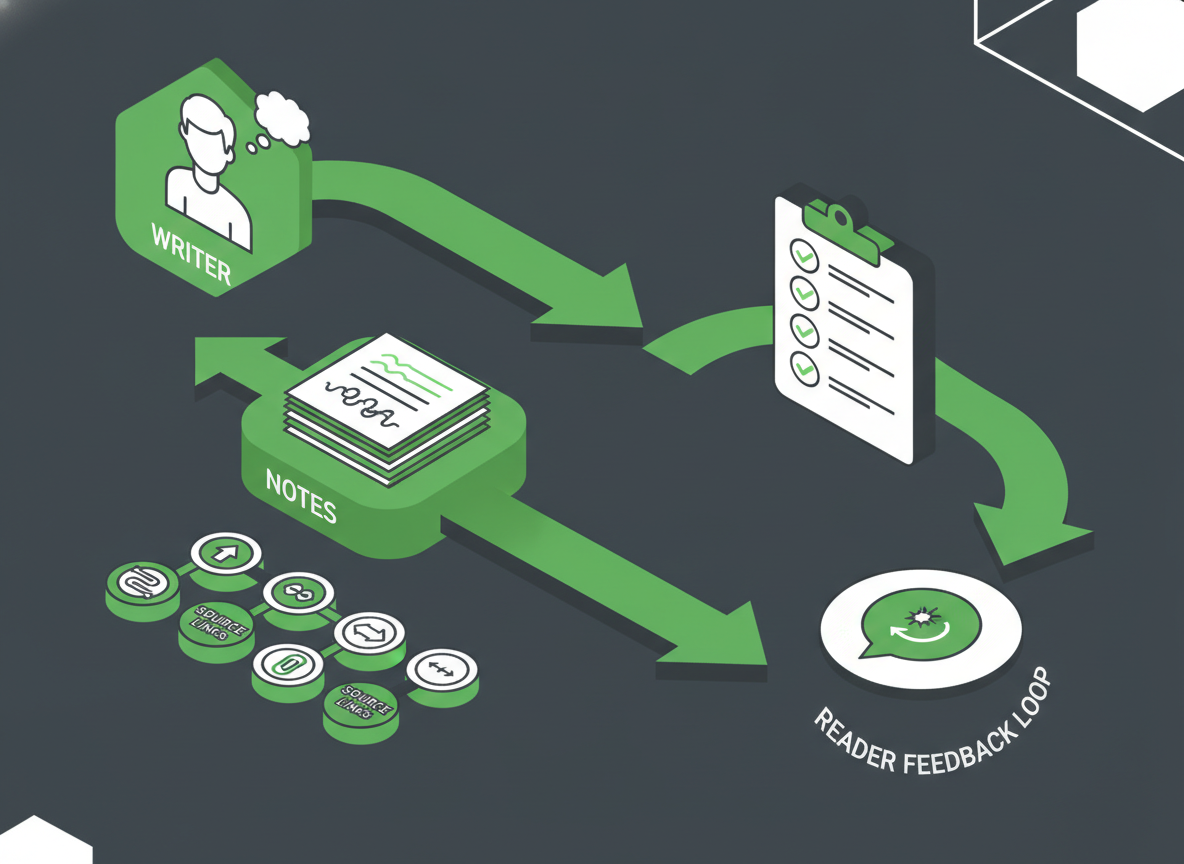
A dependable workflow looks like this:
- Research: collect primary sources, current SERP patterns, customer language, and your own observations.
- Outline: define the reader’s decision, the evidence for each major claim, and the unique angle.
- Draft: use AI for a first pass only when it helps; keep your examples and opinions specific.
- Edit: remove generic filler, verify claims, add context, and rewrite in a recognisable voice.
- Review: check that the page answers the original query quickly and still rewards a deeper read.
Never publish a statistic just because it sounds plausible. Link to the source, state when the data was collected, and distinguish correlation from causation. Trust is a ranking asset and a reader asset.
Structure for skimmers, then earn the full read
Most visitors do not read a page from the first sentence to the last. They scan headings, lists, bold phrases, images, and summary boxes before deciding whether the article deserves their attention. Good structure respects that behaviour without reducing the writing to fragments.
Make the main promise visible early. Follow it with a short answer, then build the reasoning. Use descriptive H2 headings, compact paragraphs, meaningful lists, and examples that show the advice in action. A table of contents is particularly useful for guides with several sections, but it should reflect the real structure rather than act as decoration.
Images should clarify an idea, create visual rhythm, or help readers remember a framework. They should not be filler. Give every image accurate alternative text, compress files sensibly, and make sure the page remains understandable if images fail to load.
Design also affects trust. A clean layout, readable type, strong contrast, and a fast mobile experience communicate that the publisher cares about the reader’s time. Treat performance and accessibility as part of content quality, not as a separate technical chore.
Build distribution beyond organic search
Search is powerful, but it is not an owned audience. Algorithm changes, AI-generated answers, and changing click behaviour all make it risky to rely on one channel. A strong article should be designed for a small distribution system:
- Email: send the core lesson with one clear reason to click through.
- Social: turn one original insight into several short posts, charts, or examples instead of copying the introduction.
- Internal links: connect the new article to relevant older guides and link back from those guides where appropriate.
- Communities: answer a real question in context and link only when the article genuinely adds depth.
- Updates: revisit the page when its facts, screenshots, tools, or recommendations become outdated.
Content compounds when each article strengthens the next one. Build topic clusters rather than isolated posts: a broad guide can link to focused tutorials, comparisons, checklists, and case studies. Over time, this gives readers a path and gives search engines clearer evidence of topical coverage.
Measure outcomes, not just pageviews
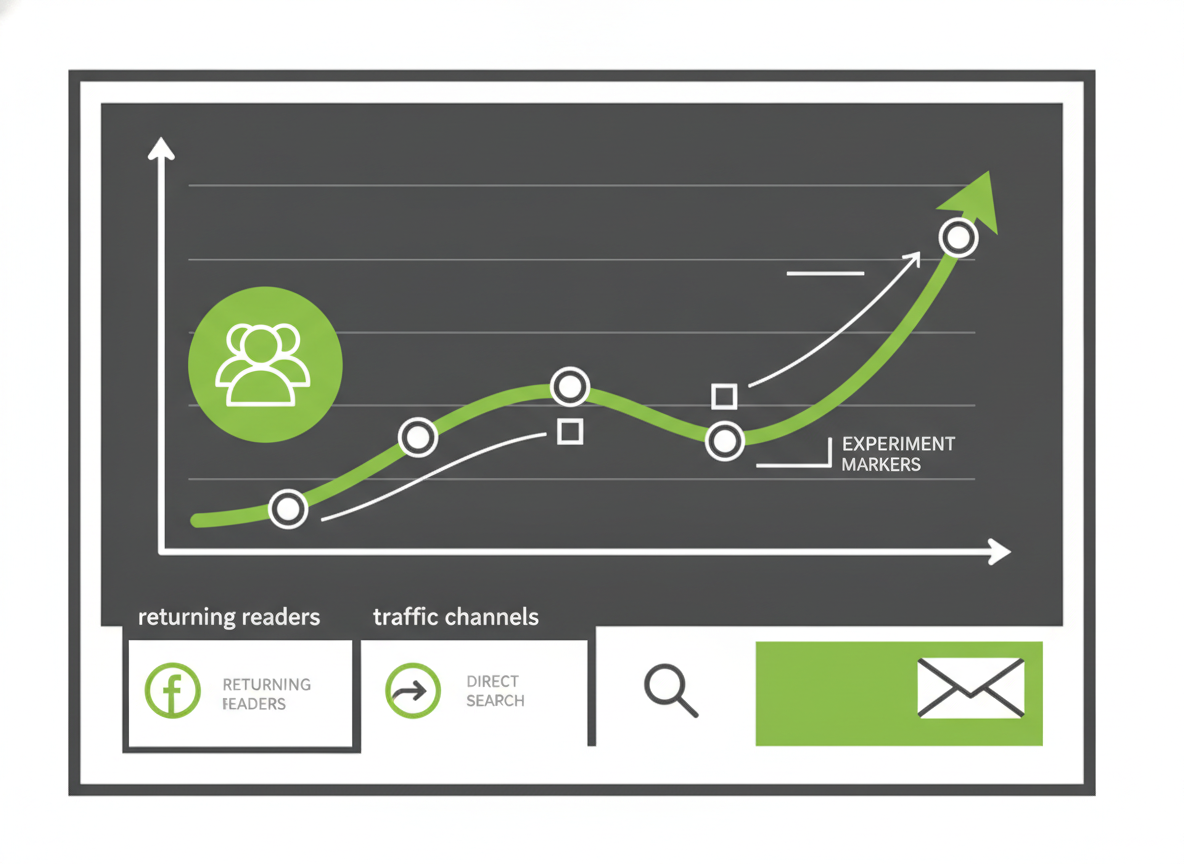
Traffic is useful, but it is only the beginning. A practical measurement dashboard should connect visibility to reader quality and business value.
Track four layers:
- Visibility: impressions, clicks, rankings, and queries bringing visitors.
- Engagement: engaged sessions, scroll depth, return visits, and email sign-ups.
- Content health: pages losing clicks, outdated sections, broken links, and unanswered questions.
- Outcome: enquiries, affiliate clicks, product sales, downloads, or whatever action matters to your site.
Review the dashboard monthly, but do not rewrite a page after a few days of noisy data. New content often needs time to settle. Compare similar pages, look for patterns, and make one or two meaningful changes at a time so you can learn what helped.
A practical 30-day plan
You do not need a huge publishing team to put this strategy into practice. Start with one topic that matters to your audience.
- Days 1–3: analyse the live SERP, interview your own search bar and comments, and define the reader’s decision.
- Days 4–7: create the outline, gather primary sources, and decide what original example or framework you will add.
- Week 2: draft, edit for accuracy and voice, add helpful visuals, and optimise the title, description, headings, and internal links.
- Week 3: publish and distribute through email, social, and relevant communities.
- Week 4: review early signals, collect reader questions, fix friction, and plan the next supporting article.
Repeat that cycle consistently. The goal is not to chase every trend. It is to build a library that becomes more useful, more connected, and more trusted over time.
Final takeaway
The future of blogging belongs to publishers who combine speed with judgment. Use live search results to understand the opportunity, use AI to remove repetitive work, use human expertise to add meaning, and use measurement to improve the next article. When every post answers a real question better than the available alternatives, your blog becomes more than a stream of updates—it becomes a durable growth asset.
Sources and further reading
- Google Search Central Blog — official search updates and guidance.
- Blogging Statistics 2026: 150+ Content Data Points — industry benchmarks reviewed for this guide.
